“The Prince”, Madness and The 2 Tone Label

A joyful evening in the midst of all the political upheaval, as the band Madness have just been performing at this year’s Glastonbury Festival and I am reminded of how much I enjoyed them in the late ’70s when the 2 Tone label suddenly flooded the charts with great ska music, updated for a new generation. In those pre-internet days, pretty much the first and only time you would ever see a band perform would be on Thursday night’s Top Of The Pops. If you liked pop music it was a must-watch show and even in the sterile atmosphere of that little studio at television centre, with an often-bored looking audience being marshalled from stage to stage, you could really tell that these young lads were just a little bit special. Of course I didn’t realise at the time that The Prince they were singing about was in fact an early sixties Jamaican ska artist called Prince Buster, and that they had taken their name from one of his songs from that period.

The Prince by Madness:

As was wont to happen in those days, a new cultural movement emerged overnight and suddenly the soft rock and disco records that we were used to listening to seemed ridiculous and irrelevant, especially to young urban males. The 2 Tone label was set up in Coventry by Jerry Dammers of the Specials and very quickly ska/reggae/punk influenced records were being released by The Specials, Madness, The Beat and The Selector. The artwork for  the record sleeves was of course two tone, featuring a black and white checkerboard and a man wearing the ska uniform of black suit, white shirt, black tie, white socks, black loafers and of course, the very necessary pork pie hat.

220px-Specials_Message_to_You_Rudy_single_cover

As for me, I was a student at the time and when we discovered that the 2 Tone Tour (has a nice ring to it) of late 1979 was coming to our city it was a no-brainer that we should go and see all these great acts live. It was going to be held in one of the big night-clubs usually frequented by weekend John/Joan Travoltas and this is where I made my first mistake – Because of the venue, I wore one of my “disco-dancing” outfits (wasn’t called clubbing in those days) complete with footless tights and shocking pink sparkly accessories. I don’t know how they managed it, but 99 percent of the audience that night were dressed in full “rude-boy” uniform complete with pork pie hat. This was the North of Scotland for goodness sake but all the charity shops within a 50 mile radius must have been totally raided of vintage clothing, and who knew that so many pork-pie hats could still have been in circulation. Yes, the shocking pink accessories stood out amongst all the black and white so in order to feel less conspicuous we quickly moved up to one of the balcony areas, to witness the phenomenon that was 2 Tone, from there.

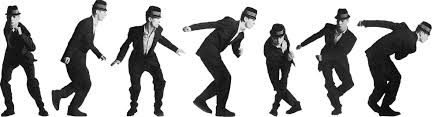
The night started off with The Selector and frontwoman Pauline Black turned in an energetic performance culminating with their hit record On My Radio. Next up was Madness and of course we were treated to The Prince but the difference here was that they had Chas Smash whose role in the band was pretty much solely, dancer. Looking back at the clip now, this is exactly how he performed right through the set. He and Suggs made a great double act, a couple of likely lads from Camden Town doing something that was totally different.

chas smash

I was sad to see that Chas Smash was not with the band at Glastonbury as he is “off doing solo projects” at the moment (they’ve had a falling out then). Something I have just got to the bottom of however is this – During the 1979 concert Chas at one point got down into the audience and it was hard to work out what he was doing. It looked as if he was in a fight, but then again the punches looked as if they were choreographed and part of his style of dancing. Turns out that it was commonplace for a skinhead element to come to the concerts somehow thinking that because of the style of clothing and haircuts, these bands had a similar mentality. Of course this could not have been further from the truth and if certain racist remarks were made, some of the band members got down into the audience to deal with it themselves – Young men and lots of testosterone.

The final band to perform that night were Coventry-based, 2 Tone founders, The Specials.  Not so much “nutty boys” but more politically informed which came through in their lyrics. Terry Hall, their lead singer, always had a bit of the Herman Munster look about him I felt which was probably intentional. Not possible to sing about the really serious issues of the day (Ghost Town) if you look like a teen-idol. We definitely witnessed something from music history that night however as the whole 2 Tone concept was short-lived and quickly morphed into something else.

As for Madness they are still out there doing their thing and although the dancing is no longer quite as energetic, they still make me smile. Aged only 18 in the clip, Suggs is now 55 and he got his grandchildren up on stage at Glastonbury at the end of their set to view the ocean of festival-goers. Could he have envisaged doing that back in 1979 when they were surreptitiously beating up unsavoury audience members? I doubt it very much, but I am very glad he did.

The Prince Lyrics
(Song by Lee Thompson)

Buster, he sold the heat with a rock-steady beat

An earthquake is erupting, but not in Orange street
A ghost-dance is preparing, You got to help us with your feet
If you’re not in the mood to dance, step back, grab yourself a seat
This may not be uptown Jamaica, but we promise you a treat

Buster, bowl me over with your bogus dance, shuffle me off my feet
Even if I keep on runnin’, I’ll never get to Orange street

So I’ll say there’s nothin’ left to say, for the man who set the beat
So I’ll leave it up to you out there, to get him back on his feet

Buster, bowl me over with your bogus dance, shuffle me off my feet
Even if I’ll keep on runnin’, I’ll never get to Orange Street

Bring back the
Who is the
We want the
Bring back the Prince…aahh!

Live Aid, Freddie Mercury and “Radio Ga Ga”

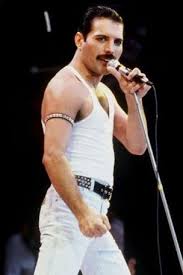
Last time I wrote about rousing live performances that induce mass participation. The performance most people my age will remember as being one of the finest ever to take place however, was when Queen arrived on stage for their segment of the Live Aid Concert, held on July the 13th, 1985. I still remember that day well and who knew before the concert began that this would be a seminal performance. To see and hear all 72,000 people in Wembley Stadium sing along with Freddie Mercury to Radio Ga Ga was a landmark moment in pop history. His a cappella section at the end of the song, featuring his amazing vocal range and ability to work the crowd, came to be known as “the note heard round the world”.

Radio Ga Ga by Queen:

There had been quite a build up to Live Aid day, but what we had mostly been hearing about, was the sheer logistical nightmare of having so many artists performing on one stage on one day. Also, there was to be a parallel concert in the US, in Philadelphia, with Phil Collins jetting between the two venues. Harvey Goldsmith, the promoter behind the staging of the Wembley show, was a man under pressure to deliver. Bob Geldof, who with Midge Ure had first come up with the idea of raising money for the Ethiopian famine crisis by making a charity single (Do They Know It’s Christmas?), was now the main driving force behind the event. A man renowned for his dishevelled appearance, Bob was now looking even more so than ever, but there could be no denying that his passion for the cause was immense and who could forget his impatience with the presenters when they just weren’t taking the business of money pledging seriously enough – “F**k the address, let’s get the number”, “Don’t go to the pub tonight, stay in and give us the money”, “There are people dying NOW so give us the money” and so it went on…..

live aid

But back to Radio Ga Ga – It was actually written by Queen’s drummer Roger Taylor and the silly sounding song title belies the fact it has some very serious lyrics about the state of the music industry in 1984. The emergence of MTV and the pop video in the early ’80s led a lot of artists to think visuals were going to take over from radio and the aural-only music experience. Ironic really as Queen had been one of the first bands to make a film to accompany their 1975 masterpiece, the triumph that was Bohemian Rhapsody. They needn’t have worried however as all these years later people are still making records, and although the visuals can be really impressive they have never taken over, yet.

It has become a cliché, too often used by talent show judges, but it is fair to say that Freddie “owned the stage” that hot summer’s day in 1985. He was in control, and had the crowd in the palm of his hand. I think the band did have the advantage over a lot of the younger artists that day in that they had experience on their side, both in terms of age (Freddie was nearly 40 – hard to believe looking at the footage now and also hard to believe that six years later he was dead), and in playing in front of these large crowds. I think they knew the impact the concert would have on the careers of those taking part that day, so they had hired a large theatre to practice in during the build up to the concert.

freddie

Having written about a few extrovert artists now who have this ability to create such magic on stage, there is a common personality trait amongst them all – They are generally very shy people. Surprising to those of us who are not that way inclined but I think that’s where the balance lies – If you are a shy person you need to create an alter-ego as an outlet. David Bowie in the ’70s was very shy, thus his Ziggy Stardust creation. Elvis Presley was very shy, and Freddie notoriously gave few interviews due to his shyness. All I can say is thank goodness we were given the privilege of watching them perform and although all of the above have now sadly passed away, we are lucky to still have amazing footage of them in action. In the Radio Ga Ga lyrics, Roger Taylor was worried about the visuals taking over, but that has never happened, and thankfully we get to share them with the generations to come.

RIP Freddie.

Radio Ga Ga Lyrics
(Song by Roger Taylor)

I’d sit alone and watch your light
My only friend through teenage nights
And everything I had to know
I heard it on my radio

You gave them all those old time stars
Through wars of worlds invaded by Mars
You made ’em laugh, you made ’em cry
You made us feel like we could fly.
Radio.

So don’t become some background noise
A backdrop for the girls and boys
Who just don’t know or just don’t care
And just complain when you’re not there

You had your time, you had the power
You’ve yet to have your finest hour
Radio, Radio.

All we hear is Radio ga ga
Radio goo goo
Radio ga ga
All we hear is Radio ga ga
Radio blah blah
Radio, what’s new?
Radio, someone still loves you!

We watch the shows, we watch the stars
On videos for hours and hours
We hardly need to use our ears
How music changes through the years.

Let’s hope you never leave old friend
Like all good things on you we depend
So stick around ’cause we might miss you
When we grow tired of all this visual

Postscript:

Just in case you’ve never seen Bob in full flow on Live Aid Day, a record was made sampling his now infamous lines. Just shows what you can do nowadays with a clever bit of technology – Love it.

Celtic Rock, Runrig and “Loch Lomond”

Last time I wrote about George Martin and of his legacy in assisting The Beatles and all those other great Liverpudlian bands and artists achieve great things in the 1960s.  Before that however, the thread I had been following was concerned with artists who are very much identified with their “place” in the world.

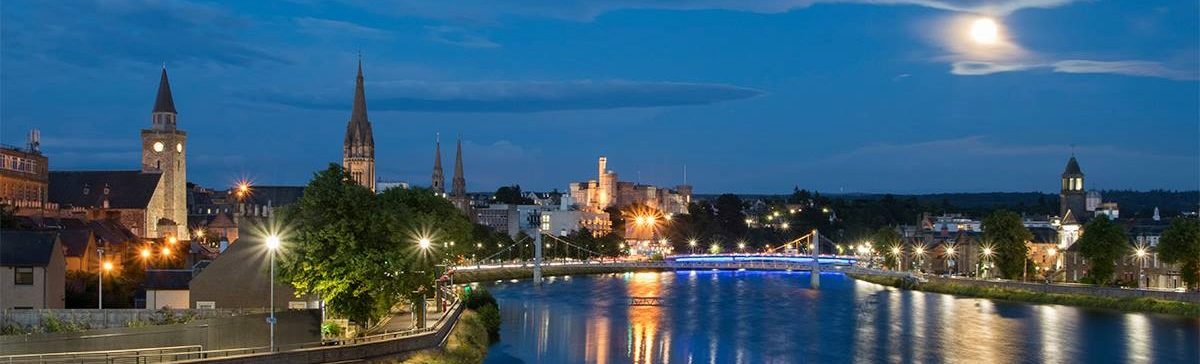
Anyone who has read my posts will have worked out by now that I come from the North of Scotland and although my childhood was rural, I have since lived in both of the big(ish) cities up here. You would have thought that the tracks of my years might have been very different to those of someone who has lived all their life in, say, Norfolk or Manchester but no, we pretty much all listen to the same radio stations, watch the same television shows/films and now have access to everything that the world wide web can throw at us.

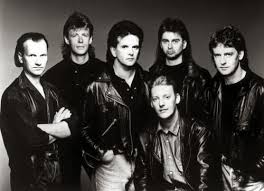
It was not until I arrived in the Highlands however that I really started to appreciate some of the great Celtic rock bands that hail from this neck of the woods. In 1987, the band always guaranteed to sell out any concert was Runrig, orginally from the Isle of Skye. Their lead singer Donnie Munro had taught my husband art at school in the ’70s, but by the late ’80s he was very much a full-time musician. When he’d told the class he was involved with a band, and that they played a kind of Gaelic/Celtic rock, the class were highly sceptical (this was the decade of glam rock, punk and disco after all) but he certainly proved them all wrong. In the period 1987-1997 they were signed to Chrysalis and released five very successful studio albums. I remember buying “The Cutter And The Clan” in 1987 not long after arriving in the Highlands and I saw them perform three times in a short space of time at various venues, including a large marquee during a memorable homecoming trip to Skye.

runrig

I really don’t know how familiar they would have been to audiences in the rest of the country but they did enter the charts several times during that period so did achieve mainstream success despite the fact they were very much of their “place”, the Gaelic-speaking Isle of Skye.

In 1991, they released an EP which of course I bought, along with the rest of the population of the Highlands. The main song on the EP was Hearthammer but on the B-side was Loch Lomond (really gets going after 3:00), a traditional song given the full-blown Celtic rock treatment.

Although Loch Lomond itself is north of Glasgow and not really closely connected to Runrig’s place in the world, it is a rousing song and I am sure it must go down really well in Canada, New Zealand, the US, Australia and all the other places with a large Scottish diaspora. Suffice to say, if you are at an event in Scotland, it is a definite crowd-pleaser and is often the last song to be played at the end of the night. Lends itself well to the forming a circle and letting the mayhem commence.

cutter

The band has changed its lineup many times since forming in 1973 but the two songwriters Rory Macdonald and Calum Macdonald have been there right since the beginning. Donnie Munro left in 1997 to pursue a career in politics but was replaced by Bruce Guthro, a Canadian from Nova Scotia, who seems to have been just the right fit.

I visited Skye last summer and met up with a native who has been a friend for years. She took us to one of the many fine-dining restaurants on Skye (two have Michelin stars) and pointed out that if we looked closely when the door to the kitchen swung open, we would see Donnie Munro loading the dishwasher! Turns out his son is now a successful chef and his dad is only too happy to help out behind the scenes, even supplying the tablet that we thoroughly enjoyed with our coffee. How things change over the years…..

Loch Lomond Lyrics
(Song by Unknown – Traditional)

By yon bonnie banks and by yon bonnie braes,
Where the sun shines on Loch Lomond.
Where me and my true love spent many days
On the banks of Loch Lomond.

Too sad we parted in yon shady glen,
On the steep sides of Ben Lomond.
Where the broken heart knows no second spring,
Resigned we must be while we’re parting.

You’ll take the high road and I’ll take the low road,
And I’ll be in Scotland before you.
Where me and my true love will never meet again,
On the bonnie, bonnie banks of Loch Lomond.

Ho, ho mo leannan
Ho mo leannan bhoidheach

You’ll take the high road and I’ll take the low road,
And I’ll be in Scotland before you.
Where me and my true love will never meet again,
On the bonnie, bonnie banks of Loch Lomond.