Adam Faith, “Someone Else’s Baby” and The Music of 1960

I had a birthday this week and it got me thinking about those birthday cards and “gift ideas” that feature the song that was at the top of the charts on the day you were born. It turns out, that for me, it would have been the Everly Brothers’ “Cathy’s Clown” which I do know but have no emotional attachment to at all. Although it is quite interesting to have a newspaper from the year of your birth (gives a good snapshot of what life was like back then), a record is a bit pointless. Although you will have heard it on the radio over the years, it won’t be one of the “tracks of your years” as you were just far too busy being a baby, all your energy going into crying for most of the night and putting on a few pounds a week. As for your parents, it probably won’t even be one of the tracks of their years as suddenly all their time, money and energy is going into the welfare of aforementioned baby – you!

Looking back at the charts of 1960 therefore is a bit of a historical exercise as apposed to a trip down memory lane but one which I have put a bit of effort into this week. I have written about this before, but it turns out that women, on the whole, were not very well represented in terms of record sales until much later. In the sample charts I looked at, we just had Connie Francis, Brenda Lee and Shirley Bassey (only British female in there so well done her). As for male solo artists there were loads of them, namely – Elvis Presley, Eddie Cochrane, Cliff Richard, Billy Fury, Adam Faith, Jim Reeves, Roy Orbison, Johnny Preston, Rolf Harris, Max Bygraves, Anthony Newley, Lonnie Donegan and many more. As for groups, the era of The Beatles hadn’t really got started yet so we only had duos such as The Everly Brothers and backing groups turned frontmen (performing mainly instrumentals) such as The Shadows.

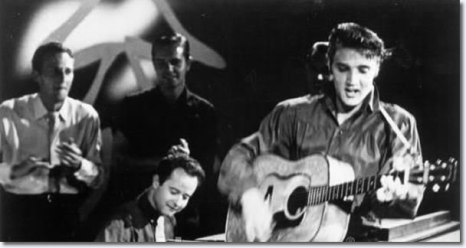
I have deliberately included the pictures above in black and white because that is how most of these artists would have been viewed if watched on television at the time. It always seems such a shame, that when looking back to those days, the world (or certainly the UK which didn’t have Hollywood) seemed a much greyer place. Of course it wasn’t, it’s simply that most of it was recorded in black and white, but difficult for those of us not born until later to see how exciting life must have been. The 1950s had started with rationing and the continued deprivations of the war years but by 1960 things were a whole lot better. There was pretty much full-employment and the consumer society had begun in earnest with young people buying clothes, records and hanging out in Coffee Bars.

The artist I’m going to write about started out playing in the The 2i’s Coffee Bar. Liverpool had The Cavern Club but London’s Soho had the 2i’s. Many artists from that rock’n’roll/skifle/rockabilly era started out there, including Cliff Richard and Tommy Steele but the one I’m going to feature is Adam Faith as he continued to pop up in other guises throughout my life.

In 1960 Adam Faith reached No. 1 in the charts with Someone Else’s Baby. He was the first artist to have his first seven singles reach the Top 5 and had I been born in the late ’40s he would certainly have been my teenage crush. He didn’t have the strongest singing voice and he had the malnourished look of someone born during the era of rationing but those short snappy songs, inspired by the pizzicato arrangements (no, I hadn’t heard of that term before either) made popular by Buddy Holly, made him one of Britain’s first “pop stars”. He was known for his hiccupping glottal stops and his pronunciation of the word ‘baby’ as ‘bay-beh’. My dad’s boss at the time (a bit of a father figure to many of the young lads in his employ) blamed him single-handedly for the sloppy way of speaking they had started to adopt in those days. He used Adam as an example of everything that was wrong with society – Harsh really, but my dad always reminisced about these rants when he appeared on television over the years.

Adam himself had actually started out as an actor and during the early 60s appeared in several films. In the long school summer holidays of the early 70s, these old black and white movies starring the “pop stars” of the day were often shown. I clearly remember watching the comedy What a Whopper with my cousins one rainy summer morning, when going outside to play was not an option. As well as Adam, the cast included all the usual stalwarts of British comedy – Wilfrid Brambell, Sid James, Charles Hawtrey and Terry Scott. I must have enjoyed it as I went on to watch the rest of the films in the season starring Billy Fury, Cliff Richard and others.
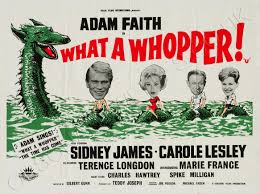
what a whopper.jpg

At around this time, in 1971, Adam himself had left the music industry behind and was starring as the eponymous hero in the ITV drama Budgie. I would be lying if I said I remember watching this show at the time as for some reason our television set was permanently tuned to the BBC but it was also on quite late so I was probably deemed too young to watch it anyway. It definitely was a popular show however and I have since watched reruns showcasing the hairbrained schemes Budgie got into with his boss Charlie Endall.

Later on the 70s, when I was having a full-blown teenage crush on the all-round star of stage, screen and pop music that was David Essex, I went into the big city with my friends to watch the film Stardust. It starred David Essex as Jim MacLaine who with the help of his manager Mike (played by Adam Faith), soon becomes a massive star. The film documents the detrimental effects of success on MacLaine and how his relationship with manager Mike becomes soured by money and success. Adam was actually nominated for a BAFTA for his performance in the film although I was probably too preoccupied with watching David Essex at the time to notice how well he executed his craft.

Somewhat bizarrely, in the 1980s Adam became a bit of a financial guru and had a column in the national press. This was the era of the yuppy and tales of obscene money-making (and spending) by London’s young stockbrokers, but all good things come to an end, and Adam ended up being declared bankrupt in later life so I’m glad now I didn’t take too much heed of his money advice back then.

His last foray into the world of popular television entertainment was when he starred with Zoë Wanamaker in the BBC comedy-drama, Love Hurts. It came about in 1992 just after I’d got married and had moved into a new house. With hefty mortgage repayments a new reality, Fridays nights were no longer spent out on the town, so instead, we settled down to watch the sparring between Frank and Tessa in Love Hurts – Our favourite show of the week. Adam was now 52 but still a very good-looking man so although I had been too young to appreciate him at the height of pop-idol success in the early ’60s, I clearly remember appreciating him as one of the most attractive actors around in the early ’90s.
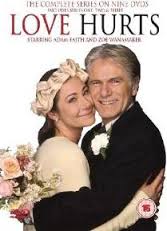
love hurts.jpg

Sadly Adam died young of a heart attack in 2003 aged only 62 but what a career he’d had. I will leave you with another song of his from 1960 – An era that forms a gap in the annals of my musical memories but worth revisiting every now and again just to remind ourselves what our parents were missing when they were busy “bringing up baby”.


Someone Else’s Baby Lyrics
(Song by Perry Ford/Les Vandyke)

Someone else’s baby
Someone else’s eyes are blue
Someone else’s baby
Someone else’s five-foot-two

Oh, who’s got a hold up
Nine carat gold love
I wonder who’s in the loveseat
Who’s got a heartbeat, like thunder

If I acted bad
I could steal his fairy queen
I know he’ll be mad
But I can’t resist the thought of being kissed

By someone else’s baby
Someone else’s special date
Someone else’s baby
Someone else is kinda late

He’d better mind out
She’s gonna find out I love her
This little fellah is gonna tell her
That someone else is me

Postscript:

I was in two minds about sharing this clip as much of it seems shockingly sexist to our 21st century sensibilities but it shows the scene with the title track to the film What a Whopper sung by Adam Faith. Glad these films are still available however as no better way of looking back at the social history of a nation, than by going through their movie archives. Enjoy.
Glen Campbell, Jimmy Webb and an American Trilogy

I hope I haven’t caused confusion – Yes Elvis Presley recorded the song An American Trilogy in 1972 and it became a bit of a showstopper for him when performed during the massive event that was “Elvis—Aloha from Hawaii” broadcast in 1973. But no, the songs I want to revisit today are the three Jimmy Webb compositions recorded by Glen Campbell in the late ’60s.

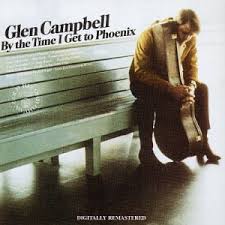
pheonixIn the UK at that time London was “Swinging” and we were listening to Sandie Shaw, Cliff Richard and Lulu, but in the USA, the average “Easy-Listening” aficionado would have been enjoying Glen Campbell. He was now in his early thirties and had served his apprenticeship in the music industry working first with his uncle in Albuquerque and then by moving to LA to work as a Wrecking Crew session musician with some of the biggest artists of the day. He even became a Beach Boy for a short while, filling in for the man himself, Brian Wilson, on one particular tour. He definitely has the look of a Beach Boy about him and I can just imagine him in his twenties sporting the short-sleeved stripy shirt that was their trademark.

In 1967 he recorded By The Time I Get To Phoenix, in 1968 it was Wichita Lineman and in 1969 Galveston. I have just revisited a map of the Southwest USA and these places are in Arizona, Kansas and Texas respectively. Glen himself was from Arkansas (born in a town called Delight – lovely) and went on to star in the western True Grit, so he was the perfect choice for this material. Elvis was ultimately a man for all of the USA but Glen was the man for these country-music-loving states. Each artist had their own American trilogy, and Glen had these three songs.

By The Time I Get To Phoenix by Glen Campbell:

I have written about Jimmy Webb before as he also wrote MacArthur Park, successful twice in the charts but with lyrics universally regarded as a bit bizarre. The song used the “cake left out in the rain” metaphor to symbolise the wasted demise of a relationship. With By The Time I Get To Phoenix, here he was again apparently inspired by the same break-up, but this time with much less bizarre lyrics. The timings of his journey across the country are tight, but at a push it turns out the timeline is possible, not that I would recommend trying. Best not to split up in the first place – Just sayin’.

Wichita Lineman by Glen Campbell:

And so we move on to song number two – Wichita Lineman tells the tale of a blue-collar worker in the heart of prairie country, alone with his thoughts. Again Jimmy was inspired by a relationship that had not turned out well for him so that’s three songs now we wouldn’t have been able to enjoy had his love-life run smoothly. Moving on to the third song, Galveston, the story-telling this time is about a soldier about to go into battle who is thinking of his hometown and the girl he left behind. Written in 1969 it was perceived to be an anti-war song but the inspiration was supposedly a soldier from the Spanish-American war and not the Vietnam war – Perhaps, but a third beautifully put together song featuring a place name in the title.

Live version of Wichita Lineman/Galveston/Country Boy (You’ve Got Your Feet in LA) by Glen Campbell:

I don’t quite know why, but I just love these story-telling American songs featuring place names. Probably because they just wouldn’t work over here. Substitute Phoenix for Felixstowe, Wichita for Widnes or Galveston for Galashiels and the romance is lost. As for 24 Hours From Tulsa, you are never 24 hours from anywhere in Britain unless you have had the misfortune to suffer multiple delays on public transport. Show Me The Way To Amarillo or Show Me The Way To Aberystwyth – I know which one I’d go for. San Jose or Sandbach – It’s a no-brainer.

Yes, it looks as if I have indeed been brain-washed from years of watching American films and television, and listening to all these great songs. As the GI Brides discovered however, when they went stateside after the end of the war with their new husbands, all that glittered was not gold and many found that the deprivations of war, experienced in a small terraced house in Britain, were nothing compared to life in a wooden shack in the Smokey Mountains. But it’s all relative and I am sure that the tourists who flock to my neck of the woods in summer just love songs with our place-names in the title – I did write about Runrig’s live version of the traditional song Loch Lomond a while back and I expect that the Caledonian Societies of North America feel the same way about that song as I do about Galveston.

amarillo

One last thing – I did consider calling the appreciation of these songs a “guilty pleasure” but have decided against using that term any more. They are indeed a pleasure, so why feel guilty about it? I have always been a fan of music from the easy-listening camp and have had to tell some porkies in my time to explain the ownership or purchase of such material. But why does music always have to be difficult? It boils down to the fact that we never want to feel embarrassed in front of our “cool” friends. No more of this nonsense I say, be loud and proud about what you enjoy and I am pretty sure that if they were being perfectly honest, our “cool” friends would agree with many of our choices.

Wichita Lineman Lyrics
(Song by Jimmy Webb)

I am a lineman for the county and I drive the main road
Searchin’ in the sun for another overload
I hear you singin’ in the wire, I can hear you through the whine
And the Wichita Lineman is still on the line

I know I need a small vacation but it don’t look like rain
And if it snows that stretch down south won’t ever stand the strain
And I need you more than want you, and I want you for all time
And the Wichita Lineman is still on the line

And I need you more than want you, and I want you for all time
And the Wichita Lineman is still on the line

“Crystal Blue Persuasion”, Pulp Fiction and Twist Contests

I was at a bit of a loss about what to write about this week. My last post was straight after this year’s Eurovision Song Contest so ended up being about the Swedish band Blue Swede and their song Hooked on a Feeling. The way the mind works, this got me thinking about the song Crystal Blue Persuasion by Tommy James & The Shondells which I came across recently when watching the brilliant television show Breaking Bad.

Crystal Blue Persuasion by Tommy James & The Shondells:

The main character, a mild-mannered chemistry teacher, inadvertently finds himself in charge of the industrial-scale production of blue-coloured crystal meth so the song was perfect for a particular scene in the show. It turns out however that Blue Swede recorded a cover of a Tommy James & The Shondells song as their follow-up to Hooked on a Feeling, so it wasn’t just the word “blue” that caused this connection, their whole sound and style must have reminded me of Tommy and his band.

tommy

As I have written about Breaking Bad before however, and as I don’t have any particular memories of Crystal Blue Persuasion other than from that show, I decided to go down another route. The song Hooked on a Feeling was from the soundtrack to the movie Guardians of the Galaxy which very effectively used lesser-known songs from a specific era to give the main character an anchor to his past. Another director who uses lesser-known songs for his soundtracks is Quentin Tarantino, and lo and behold, it turns out that Hooked on a Feeling was also used in Reservoir Dogs – We keep going in circles here.

My favourite Tarantino soundtrack is the one he put together for Pulp Fiction where the songs used were as important to the success of the finished movie as the screenplay and performances by the actors. Who could forget the opening title sequence featuring the Dick Dale classic Misirlou played at breakneck speed – This was nominally “surf rock” but the audience were left in no doubt as to what kind of movie they were about to watch. Tarantino called it “rock ‘n’ roll spaghetti western music” which is a perfectly fitting name for it.

The great thing about Pulp Fiction is that it takes place in a stylised world which cannot really be attributed to any particular era – We are led to believe it was contemporary but the eclectic mix of American rock and roll, surf music, pop and soul made the time frame irrelevant. This is yet another movie I had to immediately watch for a second time after finishing it, as it was just so mind-blowingly brilliant. The three different storylines, told out of chronological order, threw up some unforgettable performances (Samuel L. Jackson’s Jules reciting the passage from Ezekiel) and of course we had the iconic twist contest featuring Mia and Vincent (Uma Thurman and John Travolta).

Difficult to pick a stand out track as they all contributed so brilliantly to the look and feel of the film but quite appropriately I think I’ll choose the song used for the twist contest – You Never Can Tell by Chuck Berry. It was a hit for him in 1964 but of course became popular again when the film came out in 1994. A classic rock ‘n’ roll tale of young love, which against all the odds seemed to have succeeded – “C’est la vie” said the old folks, “It goes to show you never can tell”.

So, two songs from crime dramas where music is used to great effect. The creator of Breaking Bad, Vince Gilligan, pays homage to Tarantino right through the whole series by using similar characters, camera angles, names and of course music choices. Didn’t think I would end up writing about LA Mobsters when I started this post referencing the Eurovision Song Contest but it just goes to show, “You never can tell”!

You Never Can Tell Lyrics
(Song by Chuck Berry)

It was a teenage wedding and the old folks wished them well
You could see that Pierre did truly love the Mademoiselle
And now the young Monsieur and Madame have rung the chapel bell

“C’est la vie” say the old folks
It goes to show you never can tell

They furnished off an apartment with a two room Roebuck sale
The Coolerator was crammed with TV dinners and ginger ale
But when Pierre found work, the little money comin’ worked out well

“C’est la vie” say the old folks
It goes to show you never can tell

They had a hi-fi phono — boy, did they let it blast!
Seven hundred little records all rock, rhythm and jazz
But when the sun went down the rapid tempo of the music fell

“C’est la vie” say the old folks
It goes to show you never can tell

They bought a souped-up jitney was a cherry red ’53
And drove it down New Orleans to celebrate their anniversary
It was there where Pierre was wedded to the lovely Mademoiselle

“C’est la vie” say the old folks
It goes to show you never can tell

Sandie, Cliff and Lulu too!

Well, it’s Eurovision week and like many others I end up reminiscing about those halcyon days, in the long distant past, when we used to win rather a lot and if we didn’t win we usually came in either second or third at worst. But that was back in the late ’60s when London was “Swinging” and all it took was a barefoot Sandie Shaw simply to turn up, in order to sweep the board. Our songs were usually written by the big-selling songwriters of the day and the artists singing those songs were generally international stars. It was in 1967 that the UK first won the contest with the Bill Martin/Phil Coulter song Puppet On A String and they went on to write our 1968 entry Congratulations, this time sung by Cliff Richard. Sadly Cliff didn’t win, although he came a close second, but the royalties must really pour in to this day as it is used whenever a big event is taking place where “congratulations” are the order of the day. (Not very original I know but true.)

Puppet On A String by Sandie Shaw:

Taking us up to the close of the ’60s was Lulu with the song Boom Bang-a-Bang by Alan Moorhouse and Peter Warne. She was the joint winner that year with three other countries, but you can see a pattern forming here whereby very simple pop songs with titles non-specific to any particular European language, became the big winners. The song that had pipped Cliff at the post the previous year was called La La La. The big change in 1969 was that the contest was broadcast in colour, so some of us could watch Lulu sporting her cute little pink dress. Sadly however, like in most homes at that time, I still had to watch in black and white but it is nice to now see, what could have been possible, if my parents had been a bit more cutting-edge with their home entertainment systems.

The philosophy behind the staging of the first contest in the late 1950s was a good one – To help a war-torn Europe rebuild itself via a light entertainment television programme. What would the founding fathers think of what the contest has become? There are now around 40 countries competing as opposed to the original 7 and it is the most watched non-sporting event in television’s annual calendar – A juggernaut of a show.

But when it comes down to it nothing has really changed – The big winners are still the international stars of the day, it’s just that these stars now come from Russia, Sweden or perhaps Serbia. Despite being well-known all over the continent they are pretty much unknown to us in the UK until they turn up at the contest. Our home-grown recording stars won’t touch it with a barge pole as it is seen as being desperately uncool and lacks credibility – To do badly can destroy a career. So it is down to our continental rivals to sweep the board nowadays.

Unknown

The songs that win are excellent and most are generally now sung in English as that is ironically the common language of Europe. Ironic because the songs we sing, in this common language, no-one votes for any more. Yes our heyday in the contest is well and truly in the past but we do still pay for a large chunk of it and many of us will still tune in to watch the whole extravaganza on Saturday night. The staging is now spectacular and having just watched the first semi-final last night, the technical people have done an amazing job this year. As the slogan for this year’s contest says, “Come Together”, but here we are having referendums on coming apart – Not what the EBU meeting in Monaco in 1955 would have envisaged for sure. Let’s hope the whole Eurovision philosophy will see this current episode in European relations through, but still not hopeful that we will see anything other than nil points on the scoreboard for us this year. I live in hope!

Puppet On A String Lyrics
(Song by Bill Martin/Phil Coulter)

I wonder if one day that, you’ll say that, you care
If you say you love me madly, I’ll gladly, be there
Like a puppet on a string

Love is just like a merry-go-round
With all the fun of a fair
One day I’m feeling down on the ground
Then I’m up in the air
Are you leading me on?
Tomorrow will you be gone?

I wonder if one day that, you’ll say that, you care
If you say you love me madly, I’ll gladly, be there
Like a puppet on a string

I may win on the roundabout
Then I’ll lose on the swings
In or out, there is never a doubt
Just who’s pulling the strings
I’m all tied up in you
But where’s it leading me to?

I wonder if one day that, you’ll say that, you care
If you say you love me madly, I’ll gladly, be there
Like a puppet on a string

I wonder if one day that, you’ll say that, you care
If you say you love me madly, I’ll gladly, be there
Like a puppet on a string

Like a puppet on a….. String

Liverpool, Gerry Marsden and “You’ll Never Walk Alone”

A very big week for news as the inquest into the Hillsborough disaster returned a verdict that the supporters were unlawfully killed due to failures by the authorities in what should have been a duty of care. The inquest also found that the design of the stadium contributed to the crush, and that supporters were not to blame for the dangerous conditions.

I remember watching the events of 15th April 1989 unfold on television. I had returned from shopping, as was usual on a Saturday, and switched on the box. It was obvious that the football match being aired had been suspended but it took me a while to work out what was happening. As it became clear that fans were being crushed to death whilst we watched live, it became a deeply emotional experience. I remember not only shedding tears but also sobbing uncontrollably.

liverpool

As a wife and mother, I cannot begin to imagine how those poor women who had waved their husbands and sons goodbye that day, must have felt watching the same footage. 96 fans died as a result of the crush in the penned area from which there was no exit, and hundreds more were injured. At least now, having worked tirelessly for 27 years to get to the truth, these families have got justice for their loved ones. It doesn’t bring them back but they have been vindicated of being the cause of the disaster. Liverpool is a close-knit city with a unique history and I am glad that this tragedy is no longer laid at their door.

As an antidote to my last post, which was yet again about the premature passing of two of my heroes, I was going to write about a happier theme this time – “The Smiliest People in Pop”. That doesn’t seem appropriate now but as one of those people was to be Liverpudlian Gerry Marsden, of Gerry and the Pacemakers, it is perfectly fitting to include You’ll Never Walk Alone as today’s featured song. It was a No. 1 hit for them in 1963 and was subsequently adopted by Liverpool FC fans as their anthem, and has been sung on the terraces of Anfield now for over 50 years.

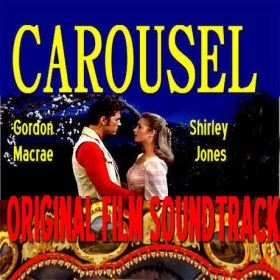
I have always loved this very stirring song, both Gerry’s version and the original from the musical Carousel. Sadly my husband is not a fan (he finds it over-sentimental and doesn’t “get” football) so I have to listen to it in private – A guilty pleasure. He was once duped however into coming with me to watch Carousel at the theatre. He stupidly got Cabaret and Carousel mixed up so thought he was coming to spend an evening watching the exploits of Sally Bowles at the Kit Kat Club. Anyway my daughter and I had a wonderful evening, the culmination being the reprise of this wonderful song in the final scene. Afterwards my husband did grudgingly admit that he might have been wrong in his judgment.

carousel-original-film-soundtrack.jpg

Gerry and the Pacemakers have been mentioned before in the blog as they were one of the many acts brought down to London by Brian Epstein in the early sixties to work with the producer George Martin. That fortuitous partnership meant that along with Cilla Black, The Beatles and Billy J. Kramer and the Dakotas, they created Merseybeat.

gerry

And as for the other smiley people in pop whom I intended to write about today, they were to be Marti Pellow of Wet Wet Wet and Glenn Gregory of Heaven 17. The mean and moody look is one that has been universally adopted by many of our rock and pop heroes but I have a soft spot for those artists who just can’t suppress a massive smile – Yes they look like the cats that got the cream and why not? They were young, selling lots of records and adored by their fans so who wouldn’t want to smile (most of them apparently).

So another post on a somewhat sombre topic but about an outcome that will hopefully help people move on with their lives. As for our smiley friends pictured above, there will be time to return to them in more detail another day. I will leave you with another version of the song, this time from the Liverpool fans themselves. Rousing stuff – RIP the 96.

You’ll Never Walk Alone Lyrics
(Song by Richard Rodgers/Oscar Hammerstein II)

When you walk through a storm
Hold your head up high
And don’t be afraid of the dark
At the end of the storm
There’s a golden sky
And the sweet silver song of a lark

Walk on through the wind
Walk on through the rain
Though your dreams be tossed and blown

Walk on walk on with hope in your heart
And you’ll never walk alone
You’ll never walk alone

When you walk through a storm
Hold your head up high
And don’t be afraid of the dark
At the end of the storm
Is a golden sky
And the sweet silver song of the lark

Walk on through the wind
Walk on through the rain
Though your dreams be tossed and blown

Walk on walk on with hope in your heart
And you’ll never walk alone
You’ll never walk

You’ll never walk
You’ll never walk alone

Postscript:

The last time I wrote about a song adopted by football fans it was “Sunshine On Leith” by The Proclaimers. I ended up including their version, the fans’ version and the version from the musical of the same name. In the interests of parity, I feel I ought to include a third version of You’ll Never Walk Alone, this time from the 1956 film. It features none other than Shirley Jones who to me, will always be David Cassidy’s mum in The Partridge Family, but that was to be about 15 years in the future. In Carousel she played Julie Jordan, a young millworker from Maine. This was Rodgers and Hammerstein’s second musical and many more were to come – I very much doubt however, when writing the song, that they could have imagined it would end up being sung in so many football grounds around the world, and all down to Gerry Marsden from Liverpool, and his Pacemakers.

Bond Themes, Nancy Sinatra and “You Only Live Twice”

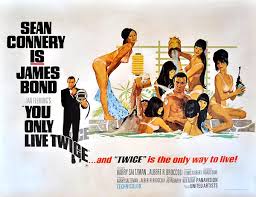
Yesterday I wrote about Rise Like a Pheonix, the song that won the Eurovision Song Contest in 2014, and how it was very much in the style of a James Bond theme song. Led me to think about all those great (and some not so great) themes from over 50 years of Bond films and I have put together my own list, ranked by personal preference. There are many such lists out there and it seems there is mixed opinion on which is the best theme song ever but at the moment, for me, it is You Only Live Twice by Nancy Sinatra from the 1967 film of the same name.

You Only Live Twice by Nancy Sinatra:

The song has a really beautiful intro which Robbie Williams cleverly used for his recording of Millennium in 1998. In the video for Millennium, Robbie, dressed in a tuxedo parodies James Bond and references many of the early Sean Connery films. Turned out to be a great way to get back on top after his departure from Take That.

But back to my list – Nancy up there at the top at the moment but like any list it changes all the time, especially with oft-heard songs such as these. There seems to be a tipping point at which a song has just been listened to just once too often and it goes from being a joy, to something you have become a bit tired and weary of hearing. I hate when that happens and rush to turn off the radio if one of my all-time favourites comes on as I just don’t want to reach that point any sooner than need be.

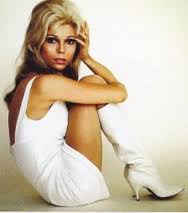
nancy

All Bond Theme Songs – Personal Ranking (feel free to disagree)

1. You Only Live Twice – 1967 – Nancy Sinatra
2. Live and Let Die – 1973 – Paul McCartney & Wings
3. For Your Eyes Only – 1981 – Sheena Easton
4.Nobody Does It Better – 1977 – Carly Simon
5. The Living Daylights – 1987 – A-ha
6. The World Is Not Enough – 1999 – Garbage
7. From Russia with Love – 1963 – Matt Monro
8. Goldfinger – 1964 – Shirley Bassey
9. Skyfall – 2012 – Adele
10.We Have All the Time in the World – 1969 – Louis Armstrong
11.Diamonds Are Forever – 1971 – Shirley Bassey
12.All Time High – 1983 – Rita Coolidge
13.Licence to Kill – 1989 – Gladys Knight
14.A View to a Kill – 1985 – Duran Duran
15.Thunderball – 1965 – Tom Jones
16.GoldenEye – 1995 – Tina Turner
17.Tomorrow Never Dies – 1997 – Sheryl Crow
18.Writing’s on the Wall – 2015 – Sam Smith
19.Die Another Day – 2002 – Madonna
20.The Man with the Golden Gun – 1974 – Lulu
21.Another Way To Die – 2008 – Jack White & Alicia Keys
22.You Know My Name – 2006 – Chris Cornell
23.Moonraker – 1979 – Shirley Bassey

you

I still think the Golden Age of Bond movies was the Sean Connery era or perhaps it is just that I am reminded of watching them on television as a child. By the early ’70s they were a staple on high days and holidays and because the world was a much bigger place then, with foreign travel something very few of us experienced, it was worth watching them for the glamorous locations alone. Although the age of feminism and bra-burning had well and truly started by then, it really didn’t filter through to Bond movies until the Timothy Dalton era and for many of us, that was a low point in the franchise. To try and make Bond politically correct was a stretch but with the latest batch of movies starring Daniel Craig as Bond, they seem to have found the right balance.

And if you want to compare intros, here is a clip of Robbie playing Mr Bond – Don’t think he’ll ever get the main gig but it was great fun watching him in those videos from his album “I’ve Been Expecting You”. A wonderful homage to those glamorous films of the ’60s.

Millennium by Robbie Williams:

You Only Live Twice Lyrics
(Song by Leslie Bricusse/John Barry)

You only live twice or so it seems
One life for yourself and one for your dreams
You drift through the years and life seems tame
Till one dream appears and love is it’s name

And love is a stranger who’ll beckon you on
Don’t think of the danger or the stranger is gone

This dream is for you, so pay the price
Make one dream come true, you only live twice

Postscript:

Just in case anyone else has “anorak tendencies” like myself, yes there have been 24 Bond movies to date (and two by other production companies) but the first one, Dr No in 1962, did not have a title song. Monty Norman did however compose the now infamous James Bond theme for it which has been used in all the films since.

For the 1969 film On Her Majesty’s Secret Service starring one-time Bond George Lazenby, John Barry was the composer of the opening theme of the same name but Louis Armstrong’s song We Have All The Time In The World was a secondary theme, played at the end of the film. The only other exception to the rule was that Matt Monro’s vocal version of From Russia With Love was not played for the opening titles to that film but used for the closing credits.

George Martin, The Beatles and “Alfie”

I did say recently that I didn’t want the blog to become an obituary column which seemed to what was happening throughout January and February but I don’t want to omit mentioning the passing this week of one of the music world’s most well-known and influential record producers – George Martin, the 5th Beatle.

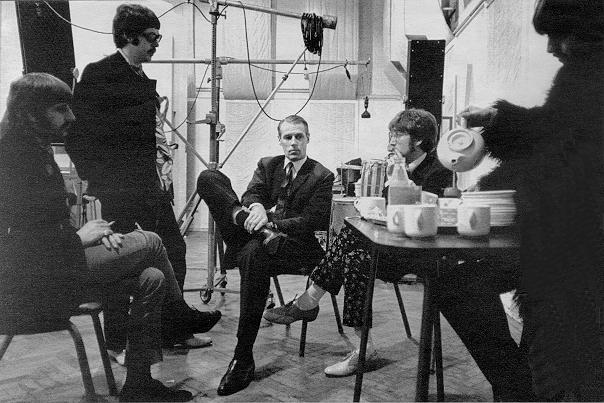
Looking back now at photos of George working with The Beatles, he could be their dad, always dressed in his shirt and tie, his brylcreemed hair immaculately combed back. As it turns out he could have been an older brother in age terms but it goes to show how that small age difference in the ’60s meant that you were either part of that pre-war generation who had suffered the hardships and direct involvement, or you were the new post-war “never had it so good” generation who were bringing such innovation to music, film, fashion and ideas.

george martin

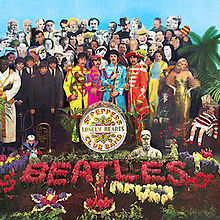
George however, although he may not have looked like his protégés, certainly had the ideas that contributed to their incredible success. In fact during their short career (considering their impact on the music world even to this day), they spent half of it in the recording studio with George, choosing that medium for their musical output rather than returning to live shows in front of screaming fans, who wouldn’t have been able to hear the songs anyway. There can’t be many people who haven’t heard of, or listened to, “Sgt. Pepper’s Lonely Hearts Club Band” which truly was a landmark album in the history of pop music. It won four Grammy Awards in 1968 and often tops polls of “The Greatest Album Ever Made”. None of this would have come about without George.

Again, I am probably going to horrify people by admitting that I was never a great fan of Sgt. Pepper and preferred The Beatles earlier pure pop output. It is simply that I was too young in 1967 to appreciate its sophistication. As a child, the films A Hard Day’s Night and Help! appealed to me much more and were shown regularly on television. As happened with David Bowie, I was just born too late to appreciate them at their creative height, but have kind of come round since.

Sgt._Pepper's_Lonely_Hearts_Club_Band

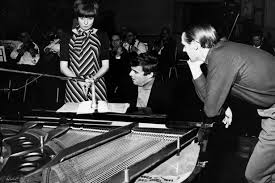
George Martin’s relationship with The Beatles came about because of his link to Brian Epstein, the band’s manager. During the early ’60s, Brian Epstein and George Martin between them, were pretty much responsible for creating the Mersey Sound or Merseybeat as it came to be called. Brian had tried all the major labels to sign his Liverpudlian stable of artists, but it was not until an initially reluctant George Martin at Parlophone saw something there he could work with, that the magic began. As well as The Beatles, other artists such as Cilla Black, Gerry & the Pacemakers and Billy J. Kramer and the Dakotas all made the regular trip south to visit George and the team at Parlophone. Cilla Black may have referred to the orchestra he used as “a bunch of auld fellas” but they certainly all contributed to making those artists the massive recording stars of the day.

cilla

There are just so many songs I could have picked to write about in relation to George Martin but the most obvious for me is of course Alfie, the song I used as inspiration for the title to the blog. Cilla Black was initially reluctant to take on this Bacharach and David classic but after Burt came across to London from the US to play and conduct on this oddly titled song, she could hardly refuse, despite her reservations that it was the name you would give a dog! George Martin was at the mixing desk performing his magic and after many takes of the song, they produced something truly remarkable.

Alfie by Cilla Black:

It’s now over 50 years since Cilla was asked to record Alfie in order to promote the Michael Caine film of the same name. Right at the end, our eponymous hero poses the question, “What’s it all about?” and I have come to realise that after 50 years of listening to popular music and now writing about the memories it inevitably conjures up, the answer is very much love, just as the song lyrics say. It is the love for our family as children, the love for our best friends as teenagers, for the various boyfriends/girlfriends on the way to finding that special someone, and now for me, the love I feel for my husband, daughter and special friends. Since starting this blog, I have never once reminisced about that important work deadline, that crucial exam result or the completion of that lengthy report, it is always about the people along the way. There is the old adage that you never go to your deathbed wishing you had spent more time at the office and after writing this, my 30th post, I am more convinced than ever that this is the case. As The Beatles sang – “All You Need Is Love”!

RIP George Martin.

Alfie Lyrics
(Song By Burt Bacharach/Hal David)

What’s it all about Alfie
Is it just for the moment we live
What’s it all about
When you sort it out, Alfie
Are we meant to take more than we give
Or are we meant to be kind?
And if, if only fools are kind, Alfie
Then I guess it is wise to be cruel
And if life belongs only to the strong, Alfie
What will you lend on an old golden rule?
As sure as I believe there’s a heaven above
Alfie, I know there’s something much more
Something even non-believers can believe in
I believe in love, Alfie
Without true love we just exist, Alfie
Until you find the love you’ve missed
You’re nothing, Alfie
When you walk let your heart lead the way
And you’ll find love any day Alfie, oh Alfie.

Elvis, “If I Can Dream” and the ’68 Comeback Special

Since writing about Elvis Presley last time, and how it came about that the first album I ever bought was one of his, I have done a lot more reading about “The King” and how he re-emerged in 1968 as one of the world’s most electrifying live performers. Hard to believe that prior to the ’68 Comeback Special he had not performed live since 1961.

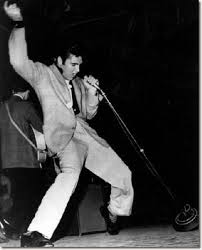
The thing with Elvis however, and I absolutely understand that he is not for everyone, is that when you watched him perform, you could really tell that he “felt the music” like no other. The reason he got into such bother in the 1950s with his pelvic rotations and thrusts, was simply because he couldn’t stop himself! The music he developed with his band was a hybrid, particular to him and his Mississippi roots, of hillbilly, gospel, country and rhythm & blues.

elvis

So, when he performed live over ten years later, in the intimate setting of the the Comeback Special studio at Burbank, you could really tell he was not just singing these songs he was “feeling them” with ever fibre of his being. In some of the Las Vegas shows, there are close-up shots where you can see the small muscles in his face move in time to the nuances of the music. None more so than during the sweet Bahamian lullaby segment within An American Trilogy. This song wasn’t actually written specifically for him but I cannot think of any artist for whom it could have had more significance, thus his obvious empathy with the music, lyrics and drama of the piece. I love watching him sing that one and I’m not even American so goodness how you guys across the pond must feel.

But the song I did want to write about was actually If I Can Dream from the ’68 Comeback Special. For some reason it was not until I re-visited the DVD last year after a friend and I at work had been discussing our love for old Elvis movies, that I really sat up and took notice of this song. It was the very last one of the show and he was dressed all in white, very much the southern gentleman. Now this is not one of those really popular songs that everyone will have heard of, and it wasn’t a big hit when it came out in the UK in 1969, but I was totally blown away by the lyrics and the passion with which he sang it. It had apparently been written just two months after the assassination of Martin Luther King who is directly quoted in the song. There was a definite gospel quality to his performance and whatever your beliefs, this was a powerful message coming from the man in the white suit.

After watching the clip numerous times, I was so blown away with the song that I decided to share it with my Facebook friends. As I said above however he is not to everyone’s taste and when I got no feedback, I took the post down. Imagine my delight therefore when before Christmas last year, a new album was released called “If I Can Dream” featuring vocal recordings of Elvis accompanied by orchestral arrangements from our very own Royal Philharmonic Orchestra. My new favourite Elvis song was the title track. Must have been one of those serendipitous things where I stumbled across something earlier in the year that would become the big hit of last Christmas. Over 47 years had elapsed since the song was written but (sadly) it was now as relevent as ever, if not more so. Probably why it resonated with the buying public so much.

I don’t know which version is best (perhaps Harry Hill could help with that one) but personally I still like the original as it is more purely Elvis. Great idea for an album however and meant that he is now back on top, being the artist with the most No. 1 albums ever in UK chart history. Not bad for someone who passed away 39 years ago.

If I Can Dream Lyrics
(Song by Walter Earl Brown)

There must be lights burning brighter somewhere
Got to be birds flying higher in a sky more blue
If I can dream of a better land
Where all my brothers walk hand in hand
Tell me why, oh why, oh why can’t my dream come true

There must be peace and understanding sometime
Strong winds of promise that will blow away
All the doubt and fear
If I can dream of a warmer sun
Where hope keeps shining on everyone
Tell me why, oh why, oh why won’t that sun appear

We’re lost in a cloud
With too much rain
We’re trapped in a world
That’s troubled with pain
But as long as a man
Has the strength to dream
He can redeem his soul and fly

Deep in my heart there’s a trembling question
Still I am sure that the answer gonna come somehow
Out there in the dark, there’s a beckoning candle
And while I can think, while I can walk
While I can stand, while I can talk
While I can dream, please let my dream
Come true, right now
Let it come true right now

First Albums, Elvis Presley and Flaming Star

Last week I wrote about “bad boys” in film, and Elvis Presley’s name had cropped up. Now I have always been an Elvis fan, and am proud to admit it, so it seems disloyal to call him a bad boy when we all know he had impeccable southern manners and respected his elders. There is no denying however that he caused a furore in the middle-class homes of America when he started appearing on television in the mid 1950s. So much so that he could only be filmed from the waist up, his pelvic rotations proving too animalistic and vulgar for viewers to handle! It seems laughable now but a letter from the Catholic church was sent to FBI director J Edgar Hoover warning him that “Presley is a definite danger to the security of the United States – His actions and motions were such as to rouse the sexual passions of teenaged youth”. So you see where I am coming from when I say that he was branded a “bad boy”.

1956-september-9-ed-sullivan-show

It makes me really sad now to think that many people only remember Elvis as the bloated, jumpsuited, cabaret singer who forgot the words to his songs and rambled incoherently during a performance (a lot to do with the sheer number of pretty appalling Elvis impersonators out there). I fortunately, have chosen to erase those Elvis images from my mind and remember mainly those great films from the ’60s, derided by the critics but loved by his fans. If you were a 10-year-old girl living in cold and windswept Scotland, to watch an Elvis film set in Hawaii, was joy personified. My dad and I were great fans of musicals and during the long winter months when there was no gardening or outdoor chores to be done, we spent many a Sunday afternoon watching Fred Astaire, Gene Kelly and of course Elvis, sing and dance their way across our television screens.

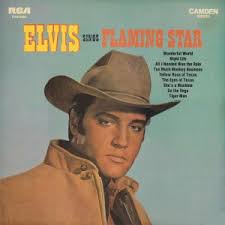
And so it came to pass, that the first album I ever bought was an Elvis one. I am highly sceptical of those people whose supposed first purchase was something really cool like Pink Floyd. It is much more plausible that like me, their first purchase was something bought as a child with Christmas or birthday money from a relative, whilst accompanied by a parent. I remember that back in the late ’60s/early ’70s, the best place to buy records was Boots the Chemist’s music department (sounds strange I know but true) and the 10/- (ten shilling) postal order given to me as a present by an aunt was converted to pre-decimalisation cash and then used to buy “Elvis Sings Flaming Star” which was a compilation album released in 1969. An unlikely choice considering he had so many great film soundtrack albums to his name, but I am pretty sure the main reason was that it was a new release based on the success of the ’68 Comeback Special and was on sale for the special price of 9/6 (nine shillings and sixpence) so fitted my budget. I was happy however as the album was full of great Elvis songs including Flaming Star, the title track to the 1960 film of the same name.

Flaming Star by Elvis Presley:

I am pretty sure I had watched that film at some point with my dad, but it was one in which Elvis had a straight acting role with no songs. He desperately wanted to be taken seriously as an actor and turned in one of his best performances to date. Sadly, due to poor box office success compared to his previous films, where he always had a singing role, he was persuaded by his mentor and manager “Colonel” Tom Parker to return to the former. I wonder now how things would have turned out if he had been allowed to carry on with straight acting roles. It is often cited that his Hollywood years were his unhappiest – He knew the films received little or no critical acclaim but he was heavily controlled by those around him whose livelihood depended on them continuing. Generous to a fault, he did what was expected of him, and that hastened the start of his decline, as his dependence on prescription drugs ramped up a gear to cope with the relentless lifestyle.

elvis

Since buying my new turntable I have revisited the album but have just worked out today, when listening to the song again in the clip, that the key change I always thought happened half way through, must have been a scratch on the record causing the needle to jump. Only took me 45 years!

Flaming Star Lyrics
(Song by Sid Wayne/Sherman Edwards)

Ev’ry man, has a flaming star
A flaming star, over his shoulder
And when a man, sees his flaming star
He knows his time, his time has come

Flaming star, don’t shine on me, flaming star
Flaming star, keep behind me, flaming star
There’s a lot of livin’ I’ve got to do
Give me time to make a few dreams come true
Flaming star

When I ride, I feel that flaming star
That flaming star, over my shoulder
And so I ride, front of that flaming star
Never lookin’ around, never lookin’ around

One fine day, I’ll see that flaming star
That flaming star, over my shoulder
And when I see, that old flaming star
I’ll know my time, my time has come

The Ronettes, Phil Spector and “Be My Baby”

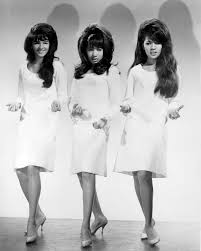
Following on from my last post when I wrote about Amy Winehouse’s album “Back to Black”, her image at that time was very much taken from the American girl groups of the early ’60s. The most famous and recognisable of these was probably The Ronettes of Be My Baby fame.

Be My Baby by The Ronettes:

Now I would be lying if I said that I remembered this song from 1963 when it was first released, but it is one of those songs you will have heard throughout your entire life, popping up on the radio and on film soundtracks. Phil Spector, who produced the record, was an innovator and in the early 60s created his now infamous “wall of sound” as a backdrop to the sultry vocals of singers like Veronica (Ronnie) Bennett of The Ronettes and Darlene Love. This new approach to recording included using whole string and horn sections, as well as guitars and drums. The use of echo chambers and multiple tracking was also involved which basically meant that the sound was re-recorded over a demo of the previous recording many times, building up the cacophony of sound that became his trademark.

ronettes

Phil Spector is one of only a few producers who became more famous than many of the artists he worked with and because the “wall of sound” was so clearly associated with him, he was able to release successful albums of his label’s greatest hits under his own name. I bought these two albums in the mid ’80s when they were re-released – Phil Spector’s Greatest Hits & Phil Spector’s Christmas Album. They are still a joy to listen to today and with so few new Christmas songs being released nowadays, his seasonal album has become a staple in our house around that time of year.

Phil Spector

In 1987, a low-budget film called Dirty Dancing was released starring Patrick Swayze and Jennifer Grey. Not ever expected to be a big hit, it has become one of the most well-loved films of all time and was the first movie to sell over a million copies on home video. As I have written elsewhere in the blog, adding the “music of the era” to a film soundtrack is a really effective tool and none more so than in the case of Dirty Dancing which was essentially a romantic drama, set in a 1963 holiday resort in the Catskill Mountains.

Be My Baby was used extensively as were other tracks from that year along with a whole load of new ones specially written for the movie. For some reason I didn’t see it when it first came out, but like most people my age, I have since bought the DVD and CD. I remember watching it with my daughter one Bank Holiday Monday and unlike when it came out in 1987, when I was in my late 20s, I felt real nostalgia for all those holiday experiences that Baby was going through. This has happened before when watching movies with my daughter – It seems that you have to be at least a generation removed to feel that emotion. At 27, I was neither young enough or old enough for that to happen. I would wager that the people who enjoyed that movie best when it came out, were either born circa 1970 (they could empathise) or 1950 (they could reflect nostalgically). Of course there are also all those people who would have enjoyed looking back at the music, fashions and social mores of that early sixties period but they would have been war babies and I don’t think that the film was aimed at that demographic when it came out.

Wouldn’t be a blog post if I didn’t mention someone who had passed away and it is sad to think that the the vital, energetic, handsome Patrick Swayze (dancer Johnny Castle in the movie) is no longer with us. Jennifer Grey is still very much with us, however her appearance has changed so much since her days of playing Baby, that I now wouldn’t recognise her. Looking back, her nose was perhaps on the large side but after having it “done”, her film career was pretty much over. A case of perhaps best to have left well alone? Who knows but yet again I end with the familiar three letter acronym – RIP, Patrick.

Be My Baby Lyrics
(Song by Jeff Barry/Ellie Greenwich/Phil Spector)

The night we met I knew I needed you so
And if I had the chance I’d never let you go
So won’t you say you love me
I’ll make you so proud of me
We’ll make ’em turn their heads every place we go

So won’t you, please
(Be my, be my baby) Be my little baby
(My one and only baby) Say you’ll be my darlin’
(Be my, be my baby) Be my baby now
Wha-oh-oh-oh

I’ll make you happy, baby, just wait and see
For every kiss you give me, I’ll give you three
Oh, since the day I saw you
I have been waiting for you
You know I will adore you ’til eternity